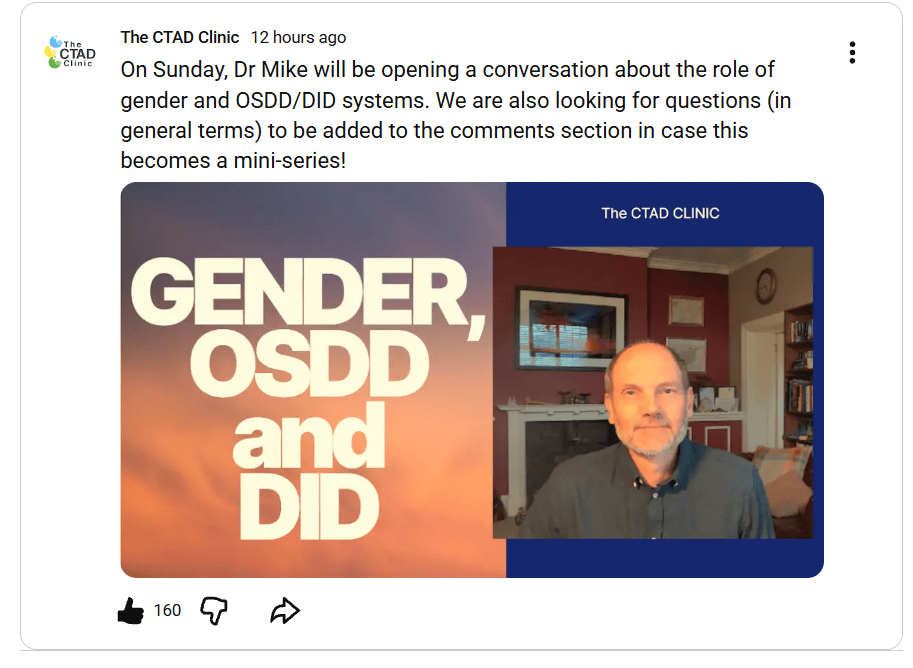
I know I shout out the CTAD clinic a lot, but they’re just one of the best resources out there – and for a change I want to flag a live session that’s upcoming, for anyone interested.
It seems to come up for a lot of systems – we’ve submitted a question, and many of those submitted by others are exactly the kinds of other questions we would ask if we were to list our top 5-10… so if that’s interesting to you too, be sure to check it out. We know we will be!
CW: Mentions of (non-graphic, non-active) suicidal thoughts
If you come here often, you may have noticed I haven’t been posting so much the last few months.
Don’t get me wrong, I have several 80% finished posts in my drafts, on varied topics from months back, but I never felt able to finish them – and lately, I just haven’t felt like writing at all.
Why?
Well, in a nutshell, depression. A deep, deep well of depression.
For a while it was dominated by a lot of fear. Then it turned into a deep, existential loneliness & sadness. Then for a while it’s just been this numbness & sense that nothing is working, nothing is worth it, and every day has just been waiting out the clock – trying to be unconscious for as much of every day & night as possible, the rest of the time doing background maths about whether or not continuing to live is worth it.
Mostly the conclusion has been, “Absolutely not”, but doing anything about it felt like it’d be such a spike in faff that continuing to wait seemed like the only option.
Ok, that was a pretty heavy start to a post.
I don’t know if I’m out of the woods, but I’ve at least found enough spark to be interested in some things again, and that’s more than I’ve had for a while, so I’m trying to rebuild from here, day by day.
During this time, I’ve felt like one person.
Which you may think, “Hey, isn’t that a good thing? Isn’t DID, by definition, a disorder? Doesn’t that mean you’re getting better?”
And well… no, apparently it’s not always a good thing. And is one of the reasons why the last “D” in DID gets thrown in the trash by many people that live with it.
Y’see, often when we’re functioning well, it often feels like we’re, “Us together”, but that’s more like “We’re in this together, and working towards some common goals (with individual parts’ specific interests being sprinkled in the rest of the time)”.
That feels very different to, “feeling like one person” – because when I feel like one person, a lot of the time it’s missing an important caveat – it’s more like, “I feel like one person… with a lot of parts missing”. It’s like a bunch of parts have locked themselves in the basement, and bolted the trapdoor – hiding away from a storm that for whatever reason they don’t feel able to weather with life as it is right now.
Which leaves the part(s) that remain with a lot of heavy lifting to do. “One Pokemon tanking all the damage”, as HealthyGamerGG on YouTube put it.
(btw, he’s not a specialist in the area, and I don’t think he’s the best resource on DID – but his analogy of a Pokemon trainer co-ordinating a team of Pokemon did make us chuckle, at least xD).
Amnesia for the good times
“State-dependent memory” is a phenomenon that pretty much all humans experience, and it’s largely dependent on emotions. Think of it like this – when you’re walking through the archives of your life experience, from the recent to the distant, we’re more likely to notice the records that are closer to how we’re feeling now.
If you walk down those archive hallways when you’re feeling happy, you’re more likely to point to memories of laughing with friends, of holidays doing fulfilling things, of working away on something that would ultimately feel satisfying and worth it. You point to those things, right past the darker memories that sit next to on the shelf, and freely and easily summon them to your hand, crack them open, and savour them – and it all feels like this is just how life is for you – and that’s a good thing.
Likewise, if you’re feeling down and depressed, particularly for any length of time, you walk down those same hallways and it’s like those happy memories are recessed back, with the darker ones standing out boldly, black spines of serious, heavy leather-bound tomes, with titles in stark red, reading things like, “Worst Fuck-up Ever”, “A Complete History of Feeling Helpless”, and “Everything You’ve Ever Lost”.
From the records that stand out to you, you make predictions about the future. If your internal world is dominated by all the good of your past, you predict that, even if you encounter a setback today, tomorrow is another day and things will probably turn out ok.
If you only notice, only re-read about all the bad from all the years so far, you predict – automatically, powerfully, that the sadness & loneliness you feel now will go on forever. You morosely pore over every grim word of every tome, nodding sadly – it all feels like this is just how life is for you… and that’s a truth that’s almost too much to bear.
That’s how these things work for pretty much everyone, and it’s how anyone can end up depressed, and anyone can experience hope – but for many people, these things just sort of naturally balance out over time. “Regression to the mean”. Emotions come and go, they don’t stay, “stuck”, not for too long – life goes on.
The thing in DID, is that often these memories are held by different parts, and so when certain parts are hibernating in the basement, these archives aren’t a continuous timeline you stroll back along… they’re separate wings of the library, wings that hold a really disproportionate number of certain types of experiences & emotions.
And it’s not just emotions – many types of trigger can signal that it’s time to assume Damage Mitigation Mode Zeta, batten down the hatches & ride out whatever situation your system appraises the current threat to be. Or conversely, that it’s go-go-go time, and everyone wants to make hay while the sun shines, because who knows how little time you’ve got until the next internal air-raid siren goes off and it’s back to nibbling the scraps of emergency rations in darkness again.
Sometimes you can get stuck in one part’s wing and all you’re surrounded by is all the happy, excited, hopeful… or all the sad and lonely, or hopeless and afraid. It’s not that the other records are recessed and dim next to the bold & attention-grabbing ones… it’s that they aren’t here in this part of the library at all.
Your princess is in another castle.
Not that you were even looking for her…
… because you forgot she ever existed to begin with.
The movement of parts and co-morbidity
I wanted to write about all of this after watching the latest CTAD clinic video about co-morbidity – specifically on Borderline Personality Disorder (BPD). It got me thinking about how the movement of parts can end up looking like pretty much anything else in the DSM when you don’t have perspective and other people in your life mirroring more of your “whole self”, or personality as a whole, back to you.
A couple of years ago, I asked my therapist (who specialises in trauma & dissociation) if he thought I had BPD (while we were already working together on DID) and he laughed (kindly), shook his head and said, “No, but clearly something has got you thinking that, so why don’t we use the session to talk about it…” and by the end of the hour I was like, “Ohhhhh….. yeah no you’re totally right, I don’t know how I ever thought that fit…”
It actually helped me put together a lot of the pieces of how much amnesia I’d been having at the time for all the sessions where we’d been talking about so much stuff that categorically didn’t fit the BPD mould (turns out I’m pretty much the opposite of a BPD / emotionally unstable presentation overall) – but that at that point in time, I could only see & remember the similarities with what I’d been learning about BPD from online resources that month or so.
(I mentioned this to Mike in the comments of the video above, and he agreed that it’s a conversation he’s had many times, with many people in the 20 years he’s been specialising in complex dissociation).
For example, with “Identity disturbance” in BPD v DID – the way I’ve always thought about it (rightly or wrongly) is that in BPD it often sounds more like, “I don’t have a strong internal sense of self”, whereas in DID it’s more like, “I have strong sense of self”… “And I have a strong (but very different) sense of self too!”… “Hey, me too!” “And me!” xD (which of course has a whole different set of benefits and challenges by comparison).
That’s been my personal experience of DID, at any rate, and there are similar distinctions across all of the diagnosis – once you get into the details, BPD and DID turn out to be remarkably different conditions – despite BPD being the most common misdiagnosis.
It’s why advocating for screening for both is important if you find yourself dealing with secondary care trauma services – they will try and put you in the BPD category as soon as you mention the words, “self-harm”, “suicidal”, or “angry”. And while BPD-targeted therapies like Dialectical Behaviour Therapy absolutely can have a place in DID work, a therapist / MH team that only works with the person that first shows up to therapy is likely to miss an awful lot that will result in a system resuming normal operations when they’re not in the therapist’s office – which can include a lot of the things you’re really struggling with.
So, much like “chronic” depression, that was another, very different example of when certain parts are taking a break, it can look from your perspective like you’re struggle is with being a certain type of person – but when those other parts wake up and come forward, you realise that as a person, the way you move through the world is completely different to when you’re operating from only one chunk of your memory & sense of self.
Why care – aren’t conditions just labels?
This matters, because it affects how you approach getting out of some of these holes you may find yourself in.
It can happen with any of the personality disorders, or pretty much anything else in the DSM. Another week, I had a similar conversation about narcissism, another week autism, another schizophrenia, depression, OCD, ADHD, SUD… all raised by me, and tall taken by my therapist in his stride as part of the process of working with dissociation. It’s a rodeo he’s clearly been on many times, and he calmly always brought it back to trying to find a healthy, more integrated way of working together inside & approaching life from where we are now.
There’s obviously a degree of, “health anxiety” and feeling like I need to label myself as broken in there, addressing which is all part of the underlying trauma processing & present day teamwork.
While some of these are genuine, “co-morbidities”, I think with DID, the whole approprach of the DSM just becomes kind of a joke because labelling yourself at all becomes this never ending exercise in trying to treat parts, and teams of parts, like we’re all one person – when we just don’t fit that mould.
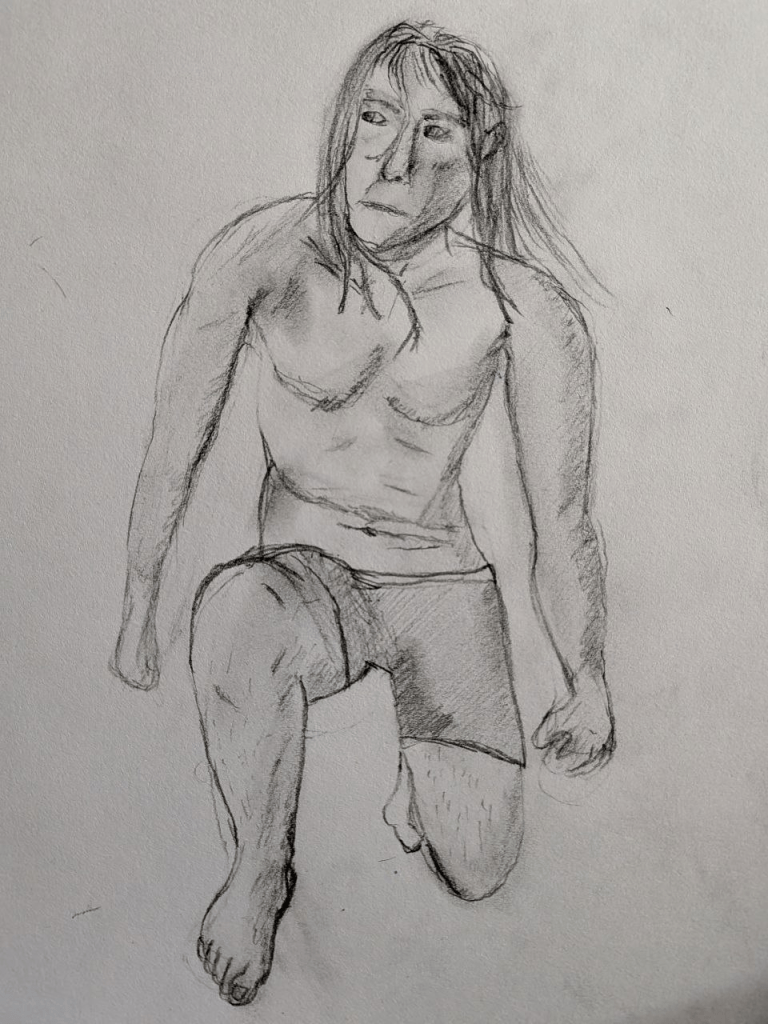
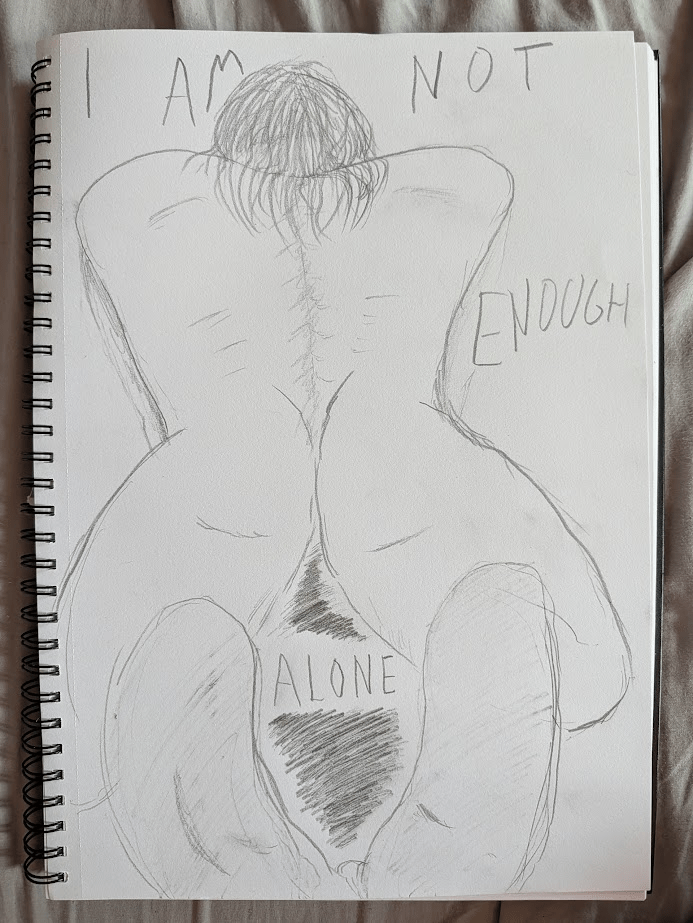
We can get that way with “positive” labels too… e.g. “I am an artist” makes total sense for some of my parts to say – I mean gods damn, one of them has always been talented, and is getting really good lately – but I’m still limited to dodgy looking stick-people if I try to draw anything, rendering the label kind of a joke, y’know?
It’s why, no matter how many times the doubt returns, and you start thinking, “I just made all this DID stuff up, and I’m just a depressed fuck-up with a shitty personality looking for an out”, we keep coming back to doing to the DID work; checking in with each other, writing to each other, giving each other time and space, even just a little, for things that may not seem interesting to you, but that you know someone else inside needs… because no, you didn’t imagine it all, your life so far hasn’t been a dream.
Working together just works – and that’s all that matters.
None of us are built to go through this world alone.
Other people are so important.
But sooner or later, we always come back to us, too.
A few weeks ago, days before I was running a 4 day festival (we run a by-friends, for-friends shindig for ~150 people each year), a friend messaged me about a show they really thought I should watch.
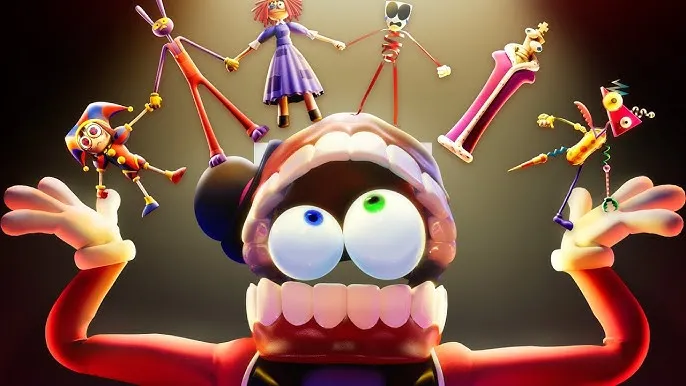
That show was The Amazing Digital Circus.
It turned out it was a series on YouTube, but that I wouldn’t be able to finish watching there anytime soon, because the finale was out in… cinemas? WTF?
So, I figured I’d get round to the meat of it after the festival, but I stuck the first episode on to see roughly what the deal was with it.
It was pretty intense and weird. I like intense and weird but was… ehhh… not sure.
But then next night I put another episode on. Then another. Ok, I was really starting to dig it…
Fast forward 2 days, and I’d finished all 8 episodes on YouTube, gone down the big Vue cinema down the road and watched the finale there.
Safe to say, the show grabbed me, and I think Gooseworx & Glitch have created something pretty neat.
The finale got a mixed reception from fans, but that may be a combination of there being ‘woke’ themes (which obviously is a plus for us – ‘woke’ pretty much means ‘not heteronormative’ and/or emotionally aware 90% of the time), and being ‘unfair’ in terms of which characters got what outcomes story-wise… which entirely misses the point, because if you look at how much screen time & emotional weight the endings got… yeah, great characters had hard hitting endings.
Life isn’t fair. There’s bittersweet emotional complexity; there’s bleakness… but also rays of hope & humanity.
Which could not be more fitting to the themes of the show.
I didn’t really have time to process the ending at the time, what with a week of setting up, running, participating in, and tearing down a festival…. but it feels like it’s time to explore The Amazing Digital Circus, and in particular Jax’s story.
Anyway, let’s take a closer look…
Spoilers for TADC, including episode 9, below.
Looking out for it
So the way that the show got recommended to me, I kind of assumed off the bat that I had some idea that one of the themes / stories that was coming would be multiplicity-related.
Don’t get me wrong, there are a lot of special interests I’m very open about – being gay/pansexual, trans/genderqueer, polyamorous, a psychologist (le gasp), various kinks… but in our circle of friends, most of those things apply to a good few other people too (apart from psychologist I guess, idk I hang out with a lot of tech nerds).
One thing I’m open about in a pretty singular way (ironically) is plurality.
So when someone recommends something as, “You should really watch/play this”, I can usually tell when the underlying subtext is, “Because it gets parts-y AF….“
Similar recommendations from other friends have put me onto the likes of Severance, Identiteaze and most recently, the excellent Disco Elysium inspired game Esoteric Ebb – so I’m not complaining!
So my guess as I watched much of the show (right up until the finale itself) was that the Circus was going to turn out to be, in some fashion, the inner world (digital or otherwise) of a DID system, with the cast as parts/alters in that system.
That turned out to be wide of the mark, but in the finale we do get to meet several of Jax’s parts in one room, in a story about gender and inner conflict that struck a particular chord with us.
For us, it took parts who were previously unaware of each other developing a speaking/writing relationship with each other to get out of the very dark & emotionally isolated place we were in about our own gender presentation(s), and it wasn’t a simple journey – so we appreciated the candour & emotional complexity used to explore those themes here.
In some ways we’re still exploring what gender means in a system, given how wildly different some of our preferred presentations & ways of holding ourselves in the world are.
Before we get onto Jax specifically, let’s take a moment to more broadly mention…
TADC as an exploration of complex trauma & learned helplessness
I could write a lot on this topic, but as we’ll be focusing on Jax, I’ll keep it brief:
Every cast member of The Circus seems to have some form of complex trauma background. There’s also a lot of queer energy going on across the board, and we find out that the ‘real life’ cast members all frequent the same inclusive, explicitly LGBTQ+ friendly bar in the outside world.
That whole “digitized version built from a ‘brain scan’” thing… y’know what, that plot point pretty much missed the mark for us, but you can basically forget about it, without it affecting the story & character arcs much at all.
One way that the “built from a brain scan” thing does affect things; it establishes the boundaries of the world for our digital cast members. While the cast think they’re human beings with organic bodies somewhere ‘out there’ to be reunited with, they initially struggle and strive to find an exit, fruitlessly, over and over, day after day… but as Caine well knows, and as we eventually learn – there is no exit to find.
And so, they never find one.
That inability to affect your environment, or change your circumstances, despite your efforts creates ‘learned helplessness’ – which is to say, you slow down your efforts; you lose hope; and eventually, you stop trying.
While the circumstances of the circus lend themselves to learned helplessness in the present, the cast also seem to have a lot of baggage from childhood.
When you learn helplessness in your relationships and broader life as a kid, it can form part of your fundamental blueprints for how you interact with the world. Learned helplessness is (pretty much) always a feature in the origins of complex trauma & dissociation.
What happens in the helplessness of the circus seems to be something akin to retraumatization, especially once Caine starts targetting the casts’ specific fears as a way of tormenting them.
For example, we see:
Ragatha’s fear of being abandoned, apparently abused and berrated by a narcisstic mother. She learned to people please & keep herself useful & her own needs small as a result.
Gangle’s extreme emotions, and difficulty regulating her own feelings – unsure of what she ‘should’ be feeling, and constantly out of sync with the emotions of those around her (at least early on)
Zooble’s difficulty accepting the parts of their body they don’t like – given Zooble is non-binary, and the form they’ve been ‘cursed’ with in The Circus, on a surface level at least, it reads a lot like gender dysphoria and/or body dysmorphia.
Etc.
The most troubled of all the main cast members in the series, from the perspectives we’re shown, appears to be Jax.
So let’s talk about Jax.
The struggles of Jax – complex trauma, gender confusion, dissociation, and parts
Jax acts like an asshole for much of the show.
Let’s just get that out of the way, this isn’t about giving carte blanche to someone who treats others like shit.
Still, let’s try and understand Jax a little a better. He’s a complex & very human character, despite acting like the most cartoon-y of all the ‘humans’ in the digital circus.
Right off the bat – I’m going to use “he/him” for pronouns, because while there are obviously very clear signs that there was more to his inner gender identity, the closest we get to stated preference for how he wants to be treated, we get from lines like, “Like it or not, this is what peak male performance looks like!” and the rejection of the bow Ribbit puts on his head, things like that.
He ultimately reacts very, very poorly to his internal confusion about gender being recognised by another human being, so I don’t think it makes sense to switch up his pronouns for him, however differently things might have gone had Jax had more time after Ponmi embraces him post-abstraction.
Honestly, the sadness of finding out that maybe he wanted things to be very different on that front after he’s already ‘gone’ is something that hits us hard – the idea of something similar happening to us was big fear for us at one point, before we opened up about our own gender several years ago.
Jax spends a lot of the show acting like a cartoon character. He’s hyper aggressive, mean, rude, violent, and just generally a jerk. He’s “the funny one”, “chaotic evil”… he just wants to see other people suffer.
At least, that’s how he acts when he’s disconnected from himself & the world around him.
When he’s being laid back, regardless of whether he’s kicking back, or kicking his friends down the stairs… his pupils are huge, swimming cartoonish, unfocused… like he’s letting the whole world wash over him like it’s nothing. “I’m an open book”, his eyes say, “Who cares?”, “None of this is even real”.
Except, obviously Jax does care. And when he does, we see his pupils narrow as he focuses on what he’s looking at, when he’s feeling a feeling inside of pushing it aside. Within the show, that usually means when he’s in a survival response – so the only time he’s feeling, is when he’s feeling too much. In the scenes where he’s actually getting curious about his feelings about others, his pupils are wildly shifting between these huge smooth swimming pupils (that, at times, remind me of what people’s eyes do on MDMA)… and those small pupils that, in the hellscape of the circus, usually indicate worry, concern, panic.
There’s some interesting science to this. When people are dissociating, their eyes tend to unfocus as the person disconnects from the world around them, and/or from their own internal experience… inside the feeling can be one of floating away or of everything becoming swimmy & blurry…
You can see this with Jax many times over. Perhaps one of the best examples is when he’s talking about Ragatha and his pupils are constantly changing shape as different parts of him seem to be arguing with each other, trying to understand how she can be nice to him, when, from his childhood experience, people aren’t good, people aren’t safe, and the other shoe is always going to drop sooner or later…
Re-experiencing the painful emotions of his past as he tries to make sense of people, based on the blueprint his parents gave him, doesn’t compile. Doesn’t compute. There’s clearly dissonance between the part of him that longs for connection with someone who’s only ever been kind & considerate towards him, and the hyperaware protector parts that constantly want to remind him that Ragatha just hasn’t betrayed him yet.
… and then we see him suddenly sit up, pupils huge & unfocused, rictus grin on his face, and he says, “And also she looks funny and smells weird…”.
Disconnection from the feelings.
None of this matters.
It’s easier this way.
It’s such a stark difference that you can almost use his expression as shorthand for seeing when he’s acting from a “protector part” that pushes people away, and when he’s being vulnerable and genuine.
Shoutout to this vid for doing a breakdown of how this plays out throughout the show so that we don’t have to:
I don’t straight up agree with everything in this vid, I think of Jax’s behaviour less in terms of, “masks” and more in terms of depersonalisation, derealisation, disconnection from himself (there are a few scenes where this does matter), and in terms of parts – but ultimately they do end up being quite similar things in his case in the show.
Partsapolozza
Throughout the show, we’re introduced, at times, to more than one Jax on screen at once, and to quite distinctly different ‘versions’ of Jax.
During the baseball game in episode 5, there’s a very young & innocent sounding, seemingly authentically vulnerable version who just wants everyone to have fun. Then there’s the version in the maid’s outfit. Etc.
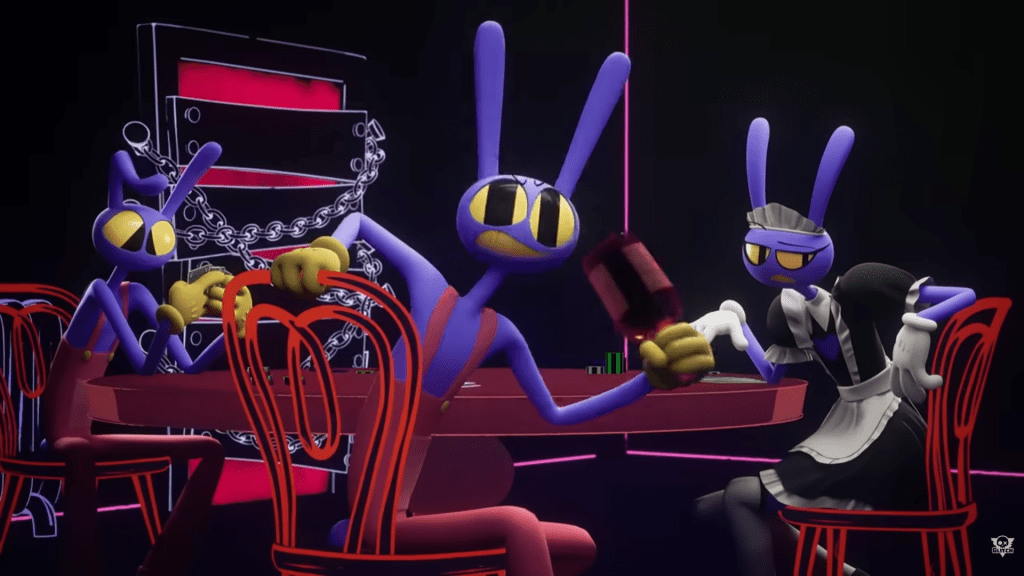
In episode 9, we meet all these different versions in one room in Jax’s abstracted mind.
The young, nervous, sweet version is sitting chained to a piano. They declare, “Don’t forget about me, I can play the piano!”… before they’re immediately shut down by a cutting comment from the maid version. The angry drunk version shouts, “Yeah, shut up and play you idiot!” and throws a bottle at them.
Given what follows, it seems pretty reasonable to assume that the maid and the drunk are at least in part, representations of his mother and father. Or parts that hold trauma from those relationships, and Jax copes by adopting many of the same behaviours, enacted (or at least represented), by distinct parts.
Note on the eyes in this scene: Check out how different they are between the different parts… and what happens to maid, drunk, and zany Jax’s pupils when whoever is behind the chained-up fifth door knocks partway though…
We know from the conversation with Ribbit that Jax’s mother was dismissive of him whenever he showed vulnerability or sweetness, and that his father was abusive and mean, just like the maid part & the angry, drinking part.
So if we assume that these voices are those of Jax’s parents… why do they look and sound like Jax?
Well…. that’s how this goes so very often for so very many of us. So many of the dismissive, critical, and abusive conversations we have with ourselves, of the beliefs we hold about ourselves – are the voices from our early life, often people we depended on for love, safety, and survival.
Except once we’ve internalised those voices, they often stop sounding like they’re coming from the other person… over time, we learn to believe that the story is coming only from within. We confuse what we were told about ourselves as kids with what we felt then, what we feel now.
The nagging voice in our heads that tells us we should be better stops sounding like our mothers, fathers, or teachers… the voice that tells us pathetic stops sounding like our older siblings or our bullies… they all just start sounding like “me”.
These are the voices we end up talking to ourselves in. They even start to be voices we use when we talk to others. We push those voices away and hold them close for protection at the same time.
As Jax tells Ribbit about the way his mom treated him, “It was confusing”.
These parts of us are sometimes experienced as an ‘inner critic’, or (particularly among dissociative folk) as distinct parts, which sometimes are referred to as, “persecutor parts” (there’s a good argument to be made for why that term isn’t entirely helpful, but either way, it has been commonly used in the complex dissociation literature & community for a long time).
However the critical voice or voices are experienced – being emotionally (and/or physically) abandoned, and treated in confusing and inconsistent ways, by the people who were supposed to love you unconditionally, who you depended on for survival, and looked up to as your source of, “Am I ok? Is the world a safe place? Can I trust other people, and can I trust myself?”…
… that’s where so much complex trauma comes from. And it’s complex because it happened over and over, inconsistently, over years, and came from the people who were supposed to love and protect you, to teach you about the world, and to support you as you grow into your own independent person with all the tools to step out into the world.
When instead what you receive is coldness, anger, criticism, inconsistency, projections of your parents’ own traumas, and are used to satisfy their unrecognised emotional needs…
… it is confusing.
All I want to do is be more like me and be less like you
What this all leads up to in episode 9 is a very clear cut ‘subtext’ (if you can even call it that). When Jax was young, after his abusive father had left, he was treated like trash by his mom. She mocked him for being sad, and accused him of being abusive like his father when he was mad.
One day he tells her something really important, really vulnerable, really tender… and she laughs at him.
Judging from Ribbit’s reaction, and how that reaction initially lands with Jax (not to mention everything the creator has explicitly said about the finale, the use of “Isn’t She Lovely”, etc), the thing he told his mother was about gender identity.
We’ve been there.
For Jax, it didn’t end there – his mom laughed at him. Then mocked him. Tormented him. And then… hugged him?
I’ve burst out uncontrollably crying a few times while watching or thinking about this scene. It takes me straight back to being 8 years old and telling my mom about wanting to marry my best friend when I grew up. Laughter. “No I don’t think so”. No explanation why. I’m pretty sure there was never any explanation of why we just didn’t talk about certain things. I think I even asked. Just… the memory ends with that shutdown.
That’s the one thing I remember ever telling my parents about my sexuality, gender, anything like that, until many, many years later. That doesn’t mean I didn’t tell them anything else and experience similar shutdowns – as I’ve said before, I remember very little of my childhood.
It’s just one of the few things I do remember, that gives me some clue as to what things were probably like the rest of the time, with gender, sexuality, sex, anger, putting your own needs first… anything that spoilt the family or religious image, anything that you could potentially imagine fitting the sentence, “What would the neighbours say?!”… whether it was private or not. Your inner world treated like a potential source of future family embarrassment & disappointment, something to be dismissed before the idea had any chance to corrupt you any further. End of discussion.
“A Reston never fails” our neighbours used to say.
What does a kid learn when you tell them their feelings are wrong, bad, or not happening at all, over and over? They learn that what they are feeling is wrong, bad, or that they must be mistaken – that they don’t know what they’re feeling, even if they were able to feel it, name it, and say it perfectly well before they told you.
They learn their feelings aren’t safe – that disclosing them risks being emotionally and/or physically abandoned by the people they depend on for love, comfort, and survival They learn to disconnect from what they feel.
The kid learns to abandon themselves.
They learn that they need to find something more acceptable to feel, or at least more acceptable to say they feel. They learn to say, “I’m fine” when they’re falling apart, “Who cares?” when they care deeply…
… and, they learn to push people away when they get too close to seeing ‘the monster’ that’s lurking below the surface. “It’s for their own good” they tell themselves, “And mine, too” as the numbness and disconnection from their own wants and needs for connection & love take hold, time & again.
They instead learn to put on different masks that may not fit underneath, but as long as no-one on the outside can tell, what difference does it make when you can’t tell what you’re feeling anyway?
People are all wearing masks.
Everyone’s playing a game.
Everyone’s rotten underneath – some people are just better at hiding it than others.
(btw, Gooseworx, the transfemme creator of TADC also voices Bubble, which just makes me love her all the more...)
“I don’t want to go”
We get glimpses throughout the show of Jax without his huge grin & gaping wide eyes… his vulnerable kid self in the baseball game in ep. 5, & chained to the piano in ep. 9, making innocent bids for connection… or when he asks after Gangle & shows curiosity about whether she can be happy…
… when he tells Ribbit about how things were for him as a kid, and how his mom laughed at him.
But, Ribbit got too close to what he’d spent most of his life believing was a ‘terrible truth’ that made him a monster, that saw his mom reject him in a heartless and cruel way… so he abandoned her first.
In the montage of moments of Jax between rejecting Ribbit & his own abstraction, we get him looking in the mirror, saying, “You’re not looking so good… you gonna cry… looking like this?”
It feels like Jax may be literally repeating something his mother said to him when he confided in her… that maybe he showed her how he prefers to dress, and that was one of the many cruel things she came out with in response. Knowing that that was the straw that broke the camel’s back, and that he’d been treated that way as long as he can remember…
Breaks my heart.
Gooseworx said Jax was the story of how things could have turned out for her in a darker timeline. We’ve lived through that, & 100% get it.
It took a lot of effort, time, & grace for the femme & the masc parts of us to make peace & learn to co-exist.
The sad reality in the real world is that among trans folk, and folk with complex trauma, particularly complex dissociation, suicide rates are much higher than the general population. That by no means is to say that one can’t have a good life when one or more of those things is part of your experience, but the risk factor is there, especially when people become isolated, lost and confused about how things could ever get better.
Jax finally rejects everyone and gives up on being seen even by Pomni, his closest friend in the circus, right before he abstracts. And that’s the reality for people who struggle in isolation so much of the time.
We need other people, we need connection. It’s extremely sad when early life experiences make that difficult for so many of us, but it’s worth fighting for.
So yeah, Jax’s story is an extremely sad one.
But I think it’s extremely important to not brush it aside as a ‘lame’ ending because it ‘wasn’t fair’.
Out of the night that covers me…
Life often isn’t fair.
But as long as we draw breath, we can each choose to be the captains of our own ships, masters of our own fates.
As Viktor E Frankl puts it:
“Between stimulus and response there is a space. In that space is our power to choose our response. In our response lies our growth and our freedom.”
You can see Jax wrestling with his response over and over throughout the show. And we know that out in the ‘real world’, Leeroy is still alive & still has the capacity for growth. I like to think that in less cruel circumstances than The Circus, Jax would have been able to do the same… and who knows? Maybe abstraction isn’t really the end for someone.
If Caine can be forgiven by the cast of The Circus, maybe Jax can find compassion for himself, too…
If they do find a way to continue Jax’s story, I’d love to see them learn to give themselves grace, treat themselves and others better, and thrive as a plural character with both femme and masc parts, co-existing as a happy and healthy genderfluid system – but that’s just our personal bias, obviously 😉
So, recently we completed the fourth and final session as a participant in PREDICTSELF, a study into sense of self in people with DID, run by researchers from the Institute of Psychiatry, Psychology and Neuroscience (IoPPN) at King’s College London (KCL).
PREDICTSELF sessions 1-3: A recap
Session 1was a SCID-D based assessment interview, that lasted about 3 hours, to assess whether a participant a) has DID, and b) is stable enough & has enough coping skills and support to be able to participate without being sent spiralling.
The SCID-D is a diagnostic interview protocol that includes many, many questions from research based questionnaires, and focuses on the 4 core ‘areas’ of dissociation:
Depersonalisation / derealization (I don’t feel real / connected to myself, & the world doesn’t feel real / familiar people and places feel like strangers, etc)
Dissociative amnesia (I can’t remember important events from my past / I lose time in the present)
Identity confusion (I get confused about who I am)
Identity alteration (I have alters and we take turns driving the body – my wording)
The last one, Identity Alteration, is the bit that distinguishes DID from other dissociative disorders.
N.B. it’s uncoordinated switching of drivers that is the ‘disorder’ bit specific to DID, not having alters or a system – the fam just wanted to remind me of that, we’ve had this discussion before xD It’s an important distinction when you consider that our aim in therapy, for example, is functional multiplicity, not ‘becoming one’ – and this is the case for most people with DID once they’ve actually met & spent time with their system in a compassionate and understanding way.
*coughs* Anyway, tangent over…
We learnt during session 2, from the lead researcher, that the clinical psychologist who ran our assessment in session 1 was, “Extremely impressed by us & didn’t have any concerns about us participating…” honestly, I was surprised, I had to stop a few times because of floating off during the interview, there were all kinds of questions I didn’t understand & had to ask about, there were things I couldn’t remember… but I guess that’s the, “Yup, you’ve got DID” part…. and what she was impressed about was how we responded to the floating off, the forgetting, the confusion.
That’s an important thing to remember, I think – that every time you strengthen your coping & self-care skills, you’re making progress – even if you still feel like a bit of a mess.
We’ve been doing the work, and apparently it shows.
Anyway, second tangent over…
Session 2 was a series of experiments involving pictures of either our face, or our friend’s face, and the faces of strangers, in a series of discrete judgement (this or that) tests. It was about 3 hours again, and honestly, the most gruelling of the sessions – was definitely going cross-eyed by the end xD I won’t say more while participants are still being recruited.
Session 3 was another series of tasks, but this time while in an EEG cap (the conductive gel they use is really cool on the skin btw, it was really nice in the hot weather). You can watch your brain activity in real time as you blink, or clench your jaw (the readings go wild during the second one…)
It’s actually a really interesting way of doing neurofeedback – which wasn’t the point of the session at all… but by the end of study debrief at the end of this session, the lead researcher had about 5 new significant research questions /directions for the future… turns out we should probably get more involved in DID research, I think we’d probably do very well there xD
We’re a PhD Psychologist who’s led international grant funded research programmes in somatic conditions, visiting lecturer at KCL, we have DID, and are currently unemployed… I’d say our brain is hungry for action, and we are uniquely placed to do well here.… watch this space, maybe…
Sessions 1-3 were in person at the IoPPN in London.
The fourth and final session: “I can’t remember”
Session 4 was a shorter, remote session with the Clinical Psychologist from session 1 (Emily, a wonderful & warm person who we very much enjoyed speaking to, despite the sometimes difficult material under discussion).
We were advised beforehand to make sure we had something grounding planned for afterwards, as this session added context by asking broad questions about trauma history, essentially.
There were four questionnaires – we had to pause part way through the second, when I started floating off after one particular question (that I don’t remember).
The third was the interesting one for me. We ended up skipping it entirely, on Emily’s advice, after we found ourselves completely unable to answer question 1. The questionnaire asked about a series of relational situations between us and our parents at a point in childhood, and how often they occurred (the options were something like, “Not at all / Once / A few times / 5-10 times / 10 – 20 times / 20 – 40 times / 40+ times / Didn’t happen, but had happened before”).
We’d been asked to chose an age based on some criteria I can’t remember (dissociative amnesia… paaaanda…), I chose 8 years old.
So the first question rolls around, and I have to estimate how often [x] had happened around age 8, using the response options above.
I tried to remember…. and realised I couldn’t.
I couldn’t remember [x] happening at all at that age.
But I didn’t answer “Not at all” because I also realised…
I couldn’t remember anything else about being 8 years old other than a couple of still-images of other difficult stuff I already knew about.
In fact, I realised I couldn’t remember much about being younger than 10 at all – just a few more stills or short loops of odd things here or there… I know my memories after 10 / 11 aren’t much better, either…
Yeah, I told Emily this and she was like, “Let’s skip these questions… they’re all like this, and sounds like the others won’t be any easier for you!” so we did, and that was appreciated.
As Emily had said several times in the session 1 assessment interview, and repeated here, “This is all helpful information – knowing that you can’t remember is definitely helpful for me, and something we’d certainly expect to see with DID – so there’s no need to try and force it”
That’s a really important point when it comes to assessing for DID generally – what happened is far less relevant to the diagnosis than knowing that you can’t remember. Dissociative amnesia is core symptom of DID – so not being able to remember isn’t some personal failing, it’s information & something to be understood with patience & compassion in its own right.
In conclusion
Taking part in DID research, when run by a team of dedicated, passionate & compassionate professionals, who put your wellbeing first, can be an interesting & rewarding experience.
Over the course of the study, it’s felt validating, I’ve felt listened to, learned a bit about what’s going on in the world of dissociation research right now (before it’s even published)… and future publications on DID research will, in a small way, be based on us…
When you’ve struggled a lot with the doubt and self-dismissal of, “I must be making this all up”, being part of something like this can be really affirming.
That’s my experience, anyway.
If you’re curious about participating in research, but aren’t quite sure what’s in it for you (a very valid thing to want to know!), I hope our perspective helps give you some idea of what it can be like.
As for us… well, I’ve been sent info on another study taking place at Cambridge, so I might see what that’s about… and maybe in time start thinking about applying for some research grants of my own in the area…
People with DID, more often than not, have difficulty sleeping.
Not necessarily all the time – we, for example, have periods where we sleep just fine. But find me a person with DID who hasn’t had periods in their life where they just weren’t sleeping and I’ll…. I dunno, eat a hat. A pillow? No, we need that for all the sleep we’re… not getting…
It’s a thing, and it’s a Big Thing for a lot of systems at times.
We’re not talking, “Yeah I only got 6 hours last night & I’ve felt tired all day”… I’ve had 6 months go by where 6 hours of sleep is like… woah… I didn’t know people could sleep that long. We’ve had whole weeks at a time (many, many of them) where the average sleep a night was about 30 minutes.
Four days in a row can go by with literally no sleep – sometimes because we don’t even try to, we just stay awake on purpose because whoever’s up front is worried they’re not going to still be in charge when we wake up… which, often… yeah, that happens.
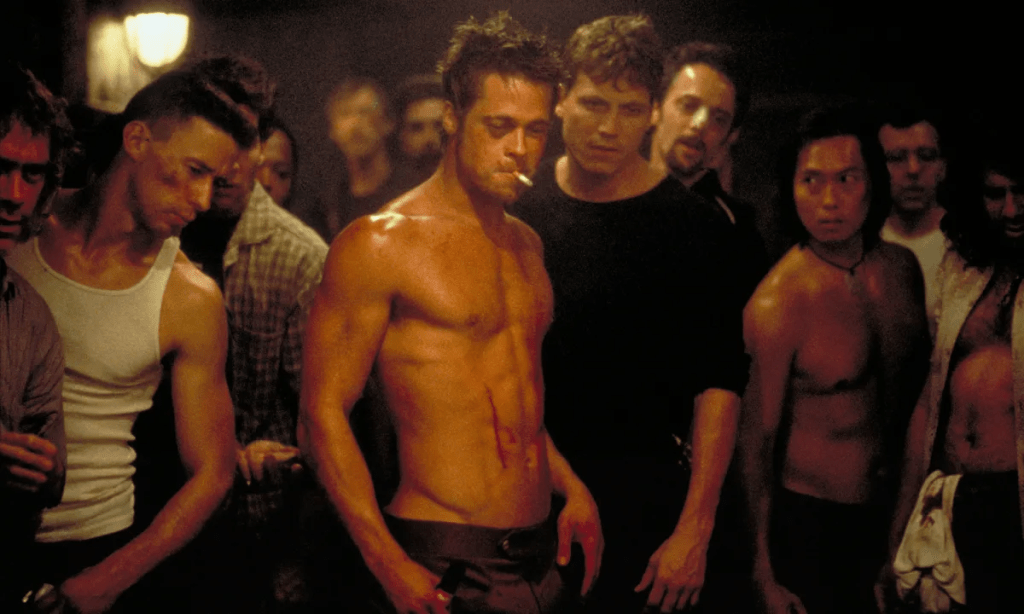
It struck me just how relatable the openings to both Moon Knight & Fight Club are when it comes to disrupted sleep & dissociative identities.
Self-restraint (literally) in Moon Knight
Steven to human statue: “Yeah, it’s like my body just wants to get up & wander, like it’s trying to get those 10,000 steps in or whatever. I’ve no idea it’s happened until I wake up god knows where having done god knows what. It’s why I try and stay awake all night. Of course, if I’m gonna have a girlfriend, I can’t go having ankle restraints on the bed. It’s like, the definition of a red flag, innit?”
(Steven, let me tell you – I’d love you either way, but ankle restraints on your bed is most certainly the opposite of a red flag for us… *gestures to similar setup on their own bed* BUT WE DIGRESS ^^;)
Steven is so innocent & I love him so much.
“Hello, and welcome to Staying Awake… let’s start with a puzzle… remember, you’ll need about 5 hours to keep your natural self”
I assume they mean 5 hours sleep here, but what do I know?
Steven wakes up in a field in the Swiss Alps, with a dislocated jaw, no idea how he got there, before immediately being chased by men with guns.
Which, honestly – that’s kinda what happens when you try to stay awake forever.
We’ve all been there, right?
Right?
—
Waking up in strange places in Fight Club
Doctor: “No, you can’t die from insomnia…”
The Narrator: “Well, what about narcolepsy? I nod off, I wake up in strange places with no idea of how I got there…”
And, shortly after – The Narrator wakes up on a plane, next to… Tyler Durden.
Soap… I make, and sell, soap…
After they start Fight Club together, The Narrator then meets Bob (Robert Paulson, played by Meatloaf) from earlier in the film, who says he’s in Fight Club, and he’s heard the guy who founded it only sleeps an hour a night…
Well, doesn’t that feel relatable?
There are some alters who seem to most easily have access to the body when we’re really sleep deprived (not all, by any means), and it’s like… sleep deprivation is a path to them being able to get the time outside that they want. It seems to particularly be the case for parts that are most dissociated & most likely to be met with a flat-out, “No” to suggestions made while we’re well rested.
It checks out with the brain science of sleep deprivation – one of the first things to suffer as sleep dips further & further below a healthy level is impulse control. And when the impulses don’t feel like your impulses, you shut them down…. unless you can’t.
Which is why it feels very fitting that Tyler Durden, a somewhat ‘extreme alter’ (if we’re looking at the totality of his actions across the film…) first manifests during this period of extreme sleep deprivation.
I should say, our alters that we view as more ‘extreme’ have never, to our knowledge, bombed financial institution skyscrapers across 50 US cities.
That we’re aware of.
—
Obviously ‘extreme alters’ is a Hollywood trope that most systems can only relate to at a much more personal level. They’re usually only extreme in terms of disruption to the system’s own life… but this is a Hollywood film, and a damn fun one at that – it gets a pass from us. If you’re gonna make things extreme, at least do it like this, do it with style.
It’s also quite fitting that when The Narrator meets & talks to Tyler Durden, he’s very much hallucinating him as another person. Ok, ok, that’s not actually how it works, for most people with DID – and ‘hallucinating another physical person’ is a trope also used by e.g. The Crowded Room to preserve mystery so they can have the big, “… but they were the same person the whole time!” reveal…
But I will say, the more sleep deprived you are, the more it can feel like another person is literally in the room with you & become more hallucination-like in nature. Also, the visual style could just be thought of as a visually compelling way of portraying the, “Watching yourself in third person” aspect of it all.
As Tyler (Brad Pitt’s depiction of him) puts it, “You’re clearly having a hard time accepting it… so sometimes, you’re still you… other times you imagine yourself watching me…”
Note on the video title: The Narrator’s name is never revealed in the film, and in the later books it’s revealed to be Sebastian. I am Jack’s shaking head.
You’ll notice, if you watch again, no-one ever actually interacts with Ed Norton’s Narrator & Brad Pitt’s Tyler in the same scene – it’s always one or the other (and most of the time when they’re both on screen, everyone is looking at The Narrator). The world is never treating him like two physical people.
Also, again, this film pulls off what it’s trying to do narratively so well, making such a compelling story, while also not claiming to be about DID, that it doesn’t bother us one bit. YMMV.
—
Make sleep a system wellbeing priority
Which is all to say… it’s worth getting enough sleep, or at least some sleep.
It really is one of the most important things for having the capacity to navigate a life with more of what you want & less of what you don’t want.
And if things are rough right now, getting enough sleep can be one of the best things you can do to get back on track if you ever find yourself careening off the rails of your life.
We’ve been sleeping a lot better for a while now, and we’re feeling a lot more grounded, there’s a lot less switching, and a lot more internal collaboration, and that’s a good thing.
Hardly sleeping at all can lead to some of the most pronounced & dramatic switching, which, when it feels like the chips are really down, can feel empowering, like a more “complete” form of escape for the parts that are exhausted and want to hand the reins to their system’s Tyler Durden or Jake Lockley (who I will remind you, in the real world are not violent psychopaths….)
But it’s not a sustainable strategy to just try and disappear from your own life, and sooner or later you & the rest of your system will have to take responsibility for your actions – with each other, and anyone you’ve hurt or neglected in that time.
And while you may feel like there aren’t enough hours in the day for everyone to get their needs met, a handful fewer hours awake each day is actually a small price to pay for being more awake, present, and active the rest of the time.
Sleep makes both system-wide fulfilment & system responsibility easier – so at least try and make it a priority in the ways you can… and be gentle with yourselves when it’s hard to come by. Look for small steps in the right direction, celebrate your wins together, and you will find more harmony again.
Until next time – take care of yourselves, kiddos x
Ok that’s probably the most ‘clickbait’ sounding title I think I’ve ever written, but bear with me.
My god… it’s full of stars
—
Reflecting on DID with researchers at KCL
While we were doing the EEG session at KCL the other day, we had some really interesting chats with the lead researcher.
She asked if we feel like everyone with DID reaches a point where everything, “spills over”, and I knew what she meant (we were talking about unemployment & rebuilding our life at the time).
Obviously we agreed I could only speak for myself, but it sure is something I’ve heard a lot of systems (but not all) say they’ve struggled with for a period of time, once everything starts coming to light for them (and possibly the people around them) – especially if they’re finding out in their 30s, 40s, 50s or beyond.
We did the first couple of EEG tasks (I won’t say what they are), but the follow-up questions apparently showed that I don’t have psychosis, which – well, I didn’t know we were looking at that, but cool, I guess!
I did learn that apparently in people with psychosis there’s a ‘dissolving’ of the boundary between ‘self’ and ‘other’, while in DID there are often very strong boundaries between self & other (and between selves inside) – and that made a lot of sense to me, and was a validating thing to learn, that I’m finding support in the places that are right for us. Misdiagnosis is a big problem with DID, albeit most often it’s DID being diagnosed as something else, not the other way around.
—
The Default Mode Network & self-reflection
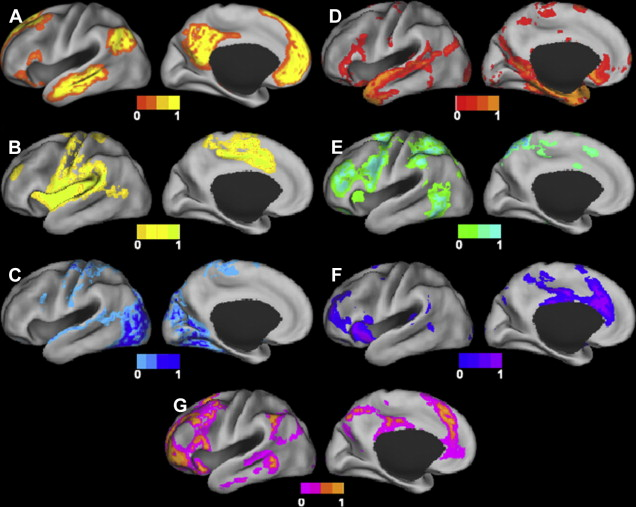
The default mode network, apparently. What does it all mean? Don’t know! Looks pretty, though ❤
After the EEG tasks were done, and we were doing the debrief, we got to talking about the default mode network (the brain’s idle state that usually involves a lot of self-reflection), and how in DID its activity is often suppressed when doing nothing (but can be hyperactive when engaged in tasks – I think) – I thought that was really interesting.
In fact, I think it’s one of the reasons why focusing on the external world & idly self-reflecting less can be very helpful in DID (and is what many systems tend towards when they’re trying to stay well under stress – keeping busy feels like self-care) – instead allowing most self-reflection to happen while creating art, or journaling, or talking with a therapist, can be helpful – it reduces the reliance on the DMN & the disrupted brain systems that interact with it.
In DID idle self-reflection, that can be a fairly healthy part of processing, often has a tendency to become fearful in nature, rather than calm & rational – so things like holding family meetings between your parts, and giving them space to write in a journal, or to draw what they’re feeling, can really help when it comes to then reflecting in therapy.
I’ve seen the results first hand many times – that having these things in place can make a big difference when it comes to being able to remember things we’ve done, & allowing parts to express things during therapy while you stay present. It’s a really helpful thing when compared with when you’re getting lost in fearful rumination where you can’t quite put the pieces of you together because, well – that’s just not how your brain works.
Over time, internal, calm self-reflection is a skill that can be built up – but it takes practice & doing the work to get there.
—
Does understanding your own neurophysiology help?
Personally – I don’t think so, not really?
Knowing about the brain regions and what they do and how they tend to be different in DID doesn’t really help much – most of what I’ve just talked about, I know from experience – from trying things, seeing what happens, what helps, reflecting on things with a therapist we trust. The brain science is a nice extra story, as far as I’m concerned – but functionally there’s not much I can do with it.
But, and I think this is important – some people do find a certain amount of validation in knowing that you can literally see the differences in what happens in the brain activity of people with DID versus ‘normal population’ control participants or ‘DID simulators’ control participants (people who are specifically asked, for the purpose of a study, to try and act like they have DID during neuroimaging tasks).
Consistently, the DID simulators get results that look like the ‘normal control’ participants, while the DID participants brains are clearly, reliably, working in a different way.
When you consider that many people with DID are worried that they’re faking it (something that, unfortunately, some people who know nothing about the condition will also sometimes accuse people of), it can be another source of validation that… no… we’re not.
Just like ADHD, or Autism, life with dissociative identities can be thought of as a form of neurodivergence – a different way of being in the world, and just as valid as any of those, or any other way of being, for that matter.
I still think listening to people’s experiences, and believing people when they tell you what life is like for them, is where we should put our faith in the vast majority of situations – but it’s all part of developing our understanding of the science of the weird, wonderful spectrum of the human condition.
I’m proud to have been doing my bit with this study – we’ve got our last session in a couple of weeks, and it’s been a really positive experience.
Until next time – take care of yourselves, kiddos x
A few recent experiences of watching / reading things, and talking about life as a system with the DID researchers at the Institute of Psychiatry, Psychology & Neuroscience at King’s College London have got me appreciating anew just how much the 6-episode TV series of Moon Knight (starring Oscar Isaac) gets right about DID.
I’ve given it a shoutout in the past, but I just wanted to do a thread of a few things that come to mind, from memory, about relatable ways it portrays living with dissociative identities (I’ve also included some relevant links to clinical perspectives on real life complex dissociation):
Before you get to know the other(s):
The confusion:When we first meet Steven, he’s loosing time, things are changing about his world around him that must have been done by him, but he can’t remember them…. Like replacing his pet fish, then going to the pet store and asking how it grew a new fin (we kinda know by this point that the fish died & Marc replaced it…)
The loneliness: … Steven then notices the time, and rushes to a restraurant to make it to a date with a woman from work he likes, who doesn’t show up… only to phone her, ask where she is and be told, “You’ve got some nerve calling me, we were supposed to meet 2 days ago…”, and Steven realises that, once again, he’s lost time & it’s cost him another promising relationship with another (seemingly decent) human being… and he has just no relatable way of reconnecting with them because he just can’t explain what happened (because he doesn’t understand himself).
When he talks to the human statue who never responds, it’s such a relatable thing. Heck, I think that’s a little bit of what this blog is – there are just so many experiences that you just feel like you can’t (or don’t want to) talk about with friends, colleagues or family members in normal conversation because so much of it doesn’t make sense to you yet.
The sense of chaos: When the villain, Harrow, takes Steven’s hands & “judges” him, the magical tattoo of a pair of scales shifting as they weigh his soul, and they don’t balance, seemingly the first time Harrow’s seen anything like this, and he looks in shock at Steven, saying, “There’s chaos in you…”
F*ckin’ Mirrors: When Steven looks in mirrors & doesn’t recognise his reflection as him, but as Marc, and Marc starts speaking to him… we’d been experiencing that for a whiiile when we saw first saw the Cinema Therapy episode on “What Moon Knight got right about DID”, & it’s one of the first things that made me sit up and go, “Err…. this? It’s this….? I should email my therapist….”
The lack of self-trust: In the show, Steven puts tape over the door latch, surrounds his bed with sand, and straps himself into bed with restraints to try and tell if he’s gotten up & done things in the night he doesn’t remember. It feels a lot like how I used to leave a webcam running in my room when I was worried about switching.
In the show, Marc clearly just runs the same setup as Steven again when he comes out then eventually returns to bed, because he’s not an idiot and he doesn’t want Steven to know he’s been out, and… yeah, many parts will just do that if you try and ‘spy on’ them. If you can set this stuff up, so can they (or, say, stop you from ever actually watching the videos….).
You build trust by getting to know one another and helping each other get what you each need, not by trying to put each other in prison.
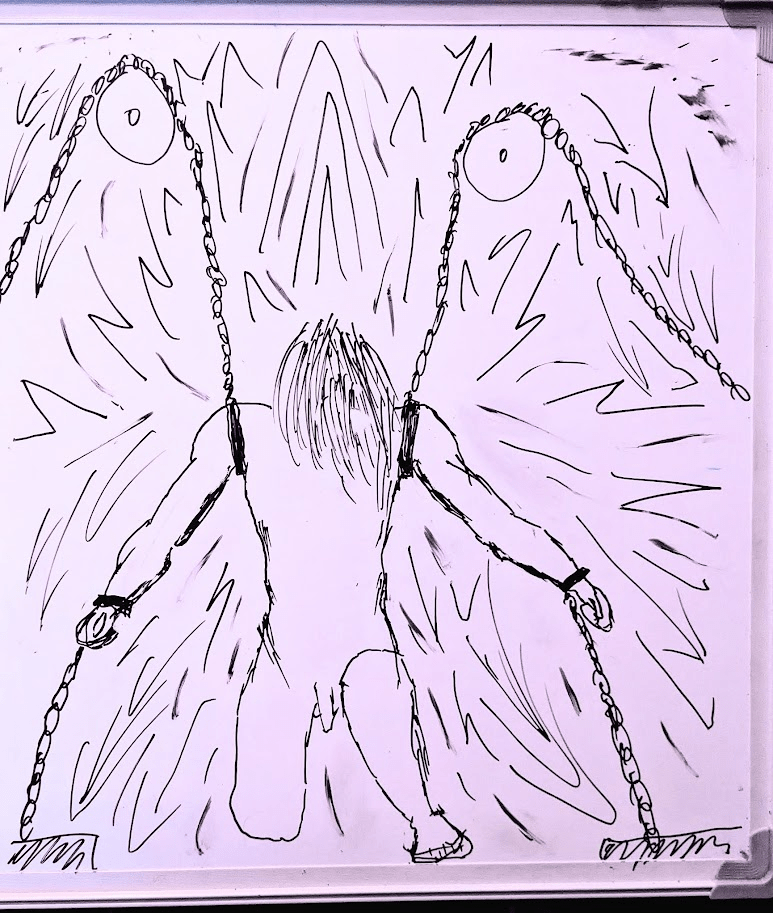
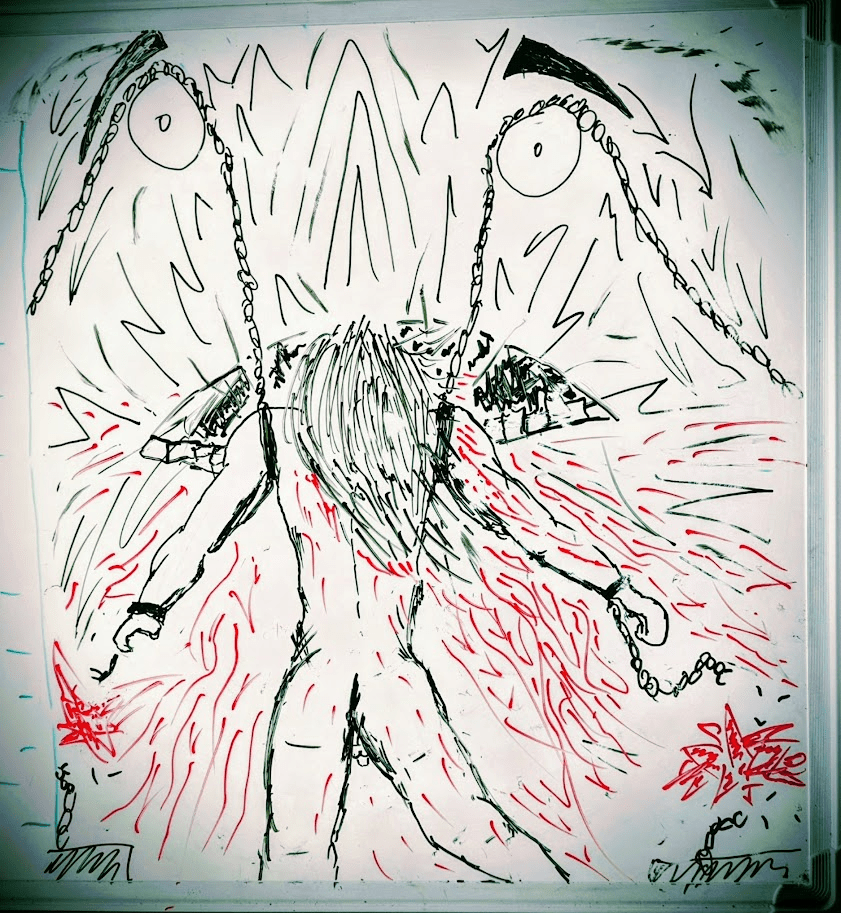
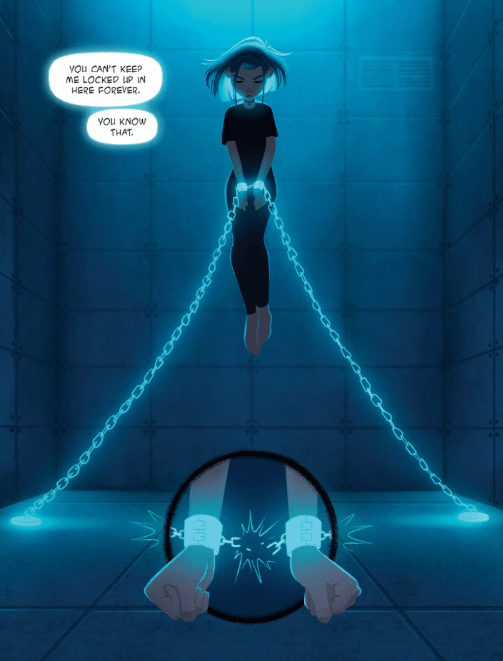
Some of our whiteboard drawings from last year…… and an opening panel from, “Elles”, a recently released graphic novel about a teenage girl & (essentially) her alters. Parts prison doesn’t work, people!
When you’re first starting to get to know the other(s):
The lack of trust between each other: Marc doesn’t trust Steven. Steven doesn’t trust Marc. They fight over who gets to control the body. The one that isn’t in control feels, “stuck” inside, watching, and we get to see glimpses of them in the mirror, reminding the other that they’re still in there and they’re looking to come out so they can stop the other fucking everything up & they can do things their way… boy howdy. This show knows.
Supporting one another & starting to build empathy: As they start to spend more time together, influence one another, and learn more about the things the other is going through (through co-consciousness, a really important step in DID therapy), they start to bond over what they have common, and little by little, understand & care about each other.
When they get separated in episode 5 (the ‘inner mental institution’ episode), and they find each other again and are both like, “Thank god I’m so glad to see you!” – I’ve had times when the others have gone quiet for a bit, and I did not like it – but I’m grateful for every (often joyful) reunion.
A lot of DID specialists will tell you this – that when people first come into therapy they’re like, “I want everyone gone, this is chaos, please take them away I want it to just be me….”, but once they get to know each other better, they’re like, “Err, actually, we’ve changed our mind – they’re my friends, my family… and I don’t want to live without them“.
I guess at that particular moment early in E5, it’s more, “Thank god, I’m so glad to see you because I felt scared & alone” – the real transformation for Marc & Steven continues to unfold as they start…
Accepting one another & finding love in a system:
Facing & overcoming the trauma together: In that same episode, when Steven sees everything Marc couldn’t cope with, and that he didn’t know until Marc shows him – the loss of his brother, the abuse from their mother and her being unable to forgive her after she dies… and he sees the role he’s playing in keeping Marc from being consumed by all that pain, by being convinced they have a loving mother who is still alive…
When Steven is able to make sense of what happened, and why things are the way they are… he’s able to be with Marc, see him, and know that he’s not some boogie-man sent to haunt him – he’s able to instead look at him with compassion & love, and say, from the heart – “It wasn’t your fault – you were just a child, and you did the best you could.”
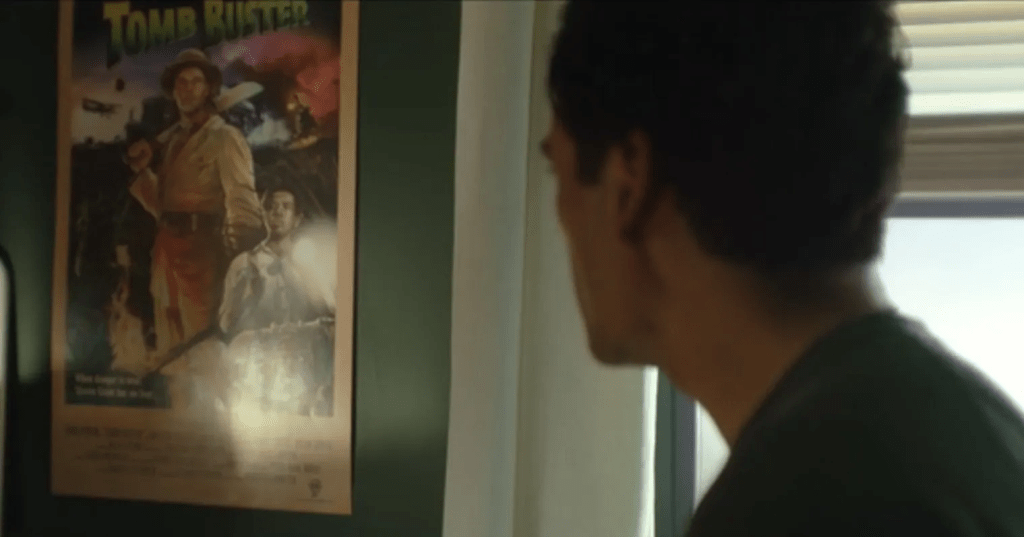
There isn’t necessarily, “The real one” and, “The made-up one(s)”:A sort of ‘plot tiwst’ in the show comes when Steven, who we’ve been with from the beginning, the one who, “gets on with normal life” (while Marc comes out when there’s a threat to do superhero stuff) is, in fact, what’s sometimes called, “a fictive” in origin – Marc was ‘there first’, and Steven was based on Steven Grant, a character from one of Marc’s favourite childhood movies.
The bedroom poster for young Marc’s favourite film, Tomb Buster: “When danger is near, Steven Grant has no fear”
It’s a kind of switcharoo of expectations – Steven was ‘created’ to keep Marc’s mind from breaking under the weight of the trauma, not the other way round. But we also learn it doesn’t matter – wherever Steven ‘came from’ at first, he has been living life as real, living, breathing human being with his own wants, needs, fears, hopes, dreams and feelings for basically their whole life – and so has Marc.
While Marc Spector may be their birth name, both identities are just as valid as each other, and there isn’t a “real one” and a, “fake one”. They both deserve to live, and they both deserve to be loved.
“You are the only real superpower I’ve ever had”: When Steven is stranded & turning to stone in the desert of lost souls, and Marc is facing eternity in paradise in the field of reeds without him, and he’s like, “I can’t leave him. I won’t”, and this scene happens…
This is what being a system is like when you get it. When you’ve made sense of why there’s more than one of you. When you understand how you’ve all been doing your best, all this time. When you understand the pain each other have been through, and how much you all mean to each other… well, Cinema Therapy nailed it:
This. It’s this.
I cry every time.
As I commented on the CT video recently:
“I don’t know if you’ll ever read this, Jono, Alan, and anyone else involved in the creation of this episode (a few years on!), but…
I just wanted to say thank you. We saw this episode before we saw the show (we’ve since gone back & it’s now our favourite) – and regardless, this episode is what helped me first start making sense of what was going on with me, with us.
And it showed us a blueprint for how things could be, helped us face the possibility of living life in a new way, together, knowing that there were people out there who could help us without trying to make anyone, “go away”. We were lucky enough to be with a therapist specialising in trauma & dissociation at the time who was open to exactly that, once we started sharing this aspect of our experiences… and we’ve come a long way since.
It’s one of the biggest gifts a 30 minute YouTube video could have ever given us.
So thank you <3″
So yeah, Moon Knight. If you’ve ever wondered why so many systems reject the “disorder” in “Dissociative Identity Disorder” and choose to use terms like, “dissociative identities”, “plural”, “multiple”, “system” or perhaps, “inner fam” instead – this show (and the CT episode) can give you a damn good idea of why.
It also does a beautiful job of showing the importance of making sense of your past, present, and potential futures in learning to overcome the legacy of trauma, what developing understanding & compassion for each other can look like, & how to live as a system that looks out for each other.
Until next time, take care of yourselves, kiddos ❤
Riley & fam x
P.S. I didn’t even mention Jake Lockley – man I wish they’d made season 2, because you can make a lot of progress and still have some parts that choose to live in the shadows until they see that it’s safe to make their presence known to the rest of you… and that could have been such a good storyline about the next step (and most systems have more than two parts, which is when the internal dynamics become more like family systems, with some parts being closer to each other than others…). Ah well – I’m just happy for what we got ❤
I’m a very logical, rational person, or at least I so often try to be. Even when I’m letting go of those kinds of self-labelling, I tend to try and think my way through my problems. I’m very, “in my head”.
But so much healing, getting to know yourself, learning to live with more calm & intention etc, is full of the counter-intuitive – resistant to the brute force approach of consciously directed thinking, at least until you start learning to listen to what the rest of your nervous system is trying to tell you, whether you think it’s “being rational” or not.
Deciding how to move forward when you feel stuck in a war between your head, your heart, and every other part of you & and your life, is the topic of so many social media articles, videos, bestselling books… and many trade based on the omission of an uncomfortable truth; there’s rarely one right way to be.
Rarely is there one answer to life’s problems, & or a universal set of magic techniques to engender self-development that are universally true & useful for everyone.
Social media & self-help books are full of claims that assume the opposite – that all your problems would be fixed if you just… learn to let go / find attachment & connection / become more disciplined & persevere through adversity / stop trying to force things and go with the flow / have a better routine / plan less & be more spontaneous / work towards long term goals / learn to just sit still with yourself / stop wasting your time doing nothing… you get the idea.
That’s, I guess, part of where religion comes from – the desire, no matter how old you are, for there to be some kind of cosmic parent figure who can just tell you the damn answer when you feel helpless & stuck – what should I do?
Whether you believe in some version of god, or the divine, or not – here on earth, in the here & now, the reality either way is: We’re all different – and advice that helps one person with one set of tendencies may be terrible advice for someone who already leans too hard into that world view & struggles to engage with the wisdom available in getting to know their own shadow.
Because, if we’re just clicking on the article / video / kindle recommendation that feels right to us, when we’re feeling from a place of desperation & helplessness – often we’re going to be choosing to listen to the advice that already sounds good to us because it’s what we already think the solution should be, even if we’ve been doing it for years & it hasn’t been helping.
That’s just how trauma works.
Pain – what is it good for?
Let’s take an example.
Pain.
What should we do with it when it finds its way into our lives?
Should we listen to it more? Should we embrace it full on, and not allow ourselves to be stopped by it when there could be rewards on the other side of striving through it? Should we be kind to ourselves & avoid it whenever we can? Is it a kindness to yourself to avoid it?
The truth is a messy one that anyone looking for an easy answer isn’t going to like; it depends.
Pain is a sensation in our bodies & our experience of the world. It’s almost always trying to tell us something. There are exceptions even there, in the case of neurological diseases & injury, but generally – the only way to know what it’s telling us is to be with it.
But, it can also be too much for our nervous systems sometimes, particularly in the case of trauma. Sometimes we just don’t have the capacity to go straight towards it without burning out, having a panic attack, switching… we need to look after ourselves to create the capacity, the space, to be able to welcome the pain in & listen to it calmly & with curiosity.
If the answer is, “it depends”, then how do you know which to do when?
Well… you have to be there & decide for yourself. No-one can give you a magic algorithm that’s going to trump your own experience & trusting yourself.
There are wonderful ways to practice both welcoming experience, and learning to cope when you don’t have the spoons to do so right now… with DID, we tend to be very prone to leaning hard into the latter. Change is possible – but you don’t find a new balancing point overnight – and learning to stay is a process.
“Being there” with DID
This search for that new balancing point is, I’ve found, where DID can make things a lot more complicated than I get the impression it would otherwise be, at times.
Because living your life in the sense of doing, being in motion, being functional; compared to being present in the moment, are often extremely dissociable for us, as it were.
Heck, I’d even say that once things start to shift in a positive direction, there’s something about showing up calmer in the world that can feel very unnerving if you’re used to your parts taking the wheel most of the time.
It can feel good for a while, feeling more in touch with your body & your feelings – but you may realise there’s this thing you need to do, and oh shoot, this part or that part normally handles that stuff, and you feel like you don’t have them on speed-dial right now and oh no, you’re doing the thing you know is gonna help bring them forwardwhile you step out,even though it often comes at a cost…
As my therapist put it recently, “As things start to feel more connected again, and as you try and connect more with the world around you… it’s like that game Operation… we can do our best, but sometimes you’re gonna get that “BZZZT!”… you’re going to hit the sides, dissociation will happen…. and that’s ok – you’re still headed in the right direction.”
And he’s right – the more in touch we get with pleasant & even neutral experiences again, the more we’re opening up our capacity to feel pain again. And this is where learning to sit with experiences as they are, rather than as we’d like them to be, becomes so important. Learning to manage our capacity so we can feel pain rather than shutting it out again & leaving parts to deal with it alone, is so important – we really are stronger together than we are alone.
When we can do that, and be with feelings – they start to move again.
Not because we force them to, but because change is part of life – and feelings move, flow, get bigger, fade, get wider, thinner, thicker, resolve, dissolve, climb, and flow into a new experience each moment – it’s just what they naturally do.
Feeling mixed emotions for the first time in a long time is a heck of a thing – and most feelings aren’t simple or one dimensional. Learning to listening to the little feelings can be as important as listening to the big ones when it comes to learning to live a life not dictated by your survival protocols.
And when your system’s no longer constantly bouncing between 95 – 100% of the way to overload anymore, as that inner doomsday clock eases up & we have more space for whatever comes up – that’s when room for friendship, joy, love, start to make appearances again.
And whatever may come, it’s important to make those experiences available to everyone inside who wants them, too – our parts have spent a long time in darkness, and they deserve to live in the light where we can find it together x
Until next time, take care of yourselves, kiddos x
There’s something that I think a lot of systems can identify with when it comes to time & energy management, and that’s fitting everything in.
When one of you is a dancer, and one likes walks in the woods, one runs, one lifts weights… well, that’s a lot to do with one body day in day out.
Then there’s all the different types of video games we like, and choosing between those (one likes crazy hard games, one likes kids games, another strategy, one emotional narratives, while some of us are like, “Ugh, emotions!”….)…
… then there’s the art, and the whole being a psychologist thing, and a creative writer, tabletop roleplaying fan, recently a festival organiser, etc etc…
…. then there’s sex stuff, which in a system, well… we’re still kind of working some of that out, there are some ways it becomes extra fun, while being a few ways a bit of extra care is warranted…
…. not to mention needing kiddo time where we can just hug plushies, stomp around and marvel at the fact we have legs, make pancakes with silly faces on them….
…. it’s a lot, and sometimes, we just go into 404 error mode and end up doing nothing.
In fact, it’s a pretty big role of some of the more connected, responsible parts of a system to try and fairly dish out the time & energy we have between different parts. And boy does it take a lot of trial and error.
Well, currently I’m finding it hard to even decide between things to write about here, so I’m gonna do a super brief run-down of what’s bouncing around our brain – and if anything jumps out as something you’d like to know more about, leave a comment or DM me through another channel if you know me irl (WordPress can be a bit of a weird closed-loop system sometimes, where you can see but not interact… I’m thinking of changing providers for that reason).
Boy am I glad it did, because this movie, while not claiming to be about DID (or mentioning it once) nails the experience of DID so incredibly well, from the opening jumbled jumping around the chronology of the story, to,:
Doctor: “No, you can’t die of insomnia…”
The Narrator (Ed Norton): “Well, what about narcolepsy? I nod off, wake up in strange places with no idea how I got there…”
Man, I just want to watch it again. Maybe I will.
Oh, btw, I took up solo boxing training (complete with a heavy bag that lives in my bedroom) a couple of years ago, and I’ve just registered for a local LGBTQIA+ boxing club – so I’ll be joining some (admittedly far less brutal) fight club action of my own, soon.
We used to train tae kwon do & several types of kung fu, so we’re no strangers to full contact sparring – our body was a temple before drugs happened & it became a playground. x
Anyway. Yeah. You wanna know what DID is like, watch Fight Club (is my 2 cents, anyway – some people won’t like the association with violence, but it’s never bothered me, especially not my physical protector parts, who love it x).
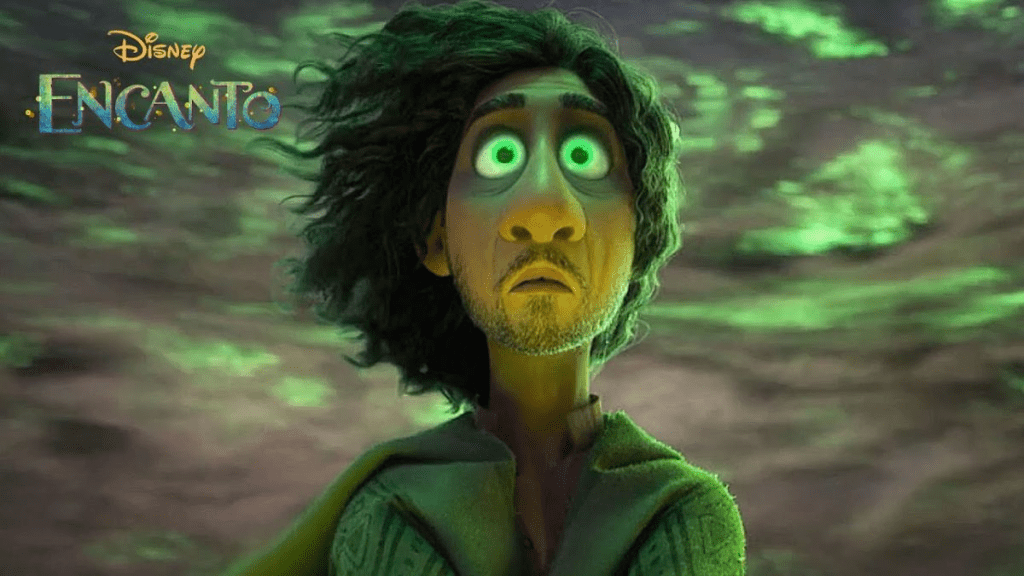
We don’t talk about Bruno… (Encanto)
In family systems theory, there’s the idea of the ‘identified patient’ or the ‘problem child’ (also sometimes called the “black sheep” of the family).
Well, I was that child in my family. In other words, all of the anxiety, stress, resentment, fear, & pain that mom & dad felt ended up bottled up in me, the gay genderqueer youngest of 3 brothers with really overt & serious OCD from like 8 years old (that I still had to wait until 20 to get any actual answers about), with very Christian parents… yeah, I didn’t stand a chance of flying under the radar no matter how hard I tried. I was the lightning rod for all their fears about not being good enough as a family, not being pious enough, what will the neighbours say, my parents own childhood traumas, dissociation, and repressed / suppressed emotions of their own…
Bruno is, obviously, the black sheep of the family in Encanto, and I was the Bruno of my family (which is why it makes me laugh that Bruno shows really obvious signs of OCD & DID in the film – he’s very, very relatable xD)
If you’re wondering, a big part of how family systems theory came about, was the realisation that helping ‘the identified patient’ often only helped the individual so much, and the system very little… as systems are usually geared towards self-sustaining & adapting – if one part changes, either the other parts pressure that part into changing back, or the pressure just moves to another part in the system.
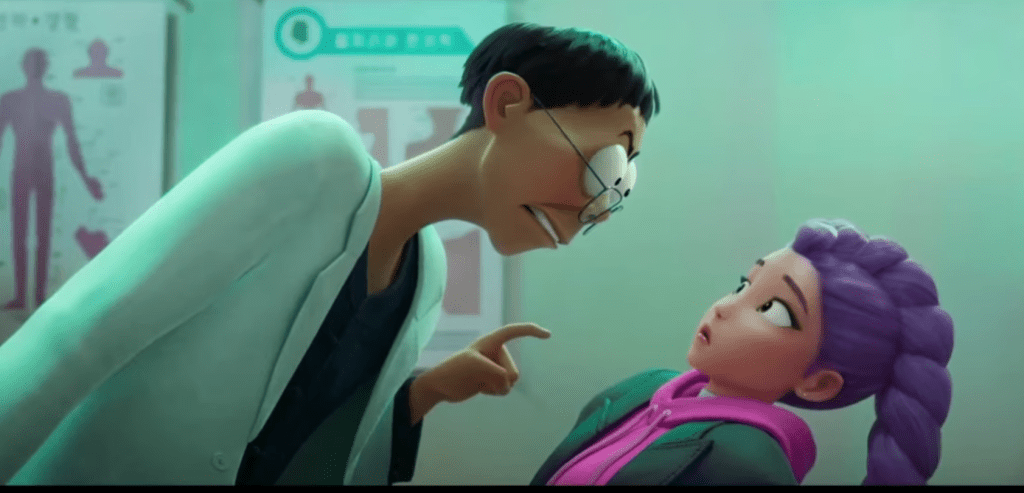
It’s like the crazy quack doctor Healer Han (who actually makes a lot of good points) in K-pop Demon Hunters about treating the part by first seeing the whole.
I seeeeeeee…..
It’s weird how being the black sheep can affect how you see yourself later in life. When I got my PhD, I just cried & felt like a total failure anyway, because I’d so deeply internalised the idea that I’d never be good enough, that it had taken on a life of it’s own… my parents could say they were proud of me, but I no longer cared – I was no longer good enough for me. That’s one I’m still trying to unravel these days.
One of the things I love about Encanto though, is that every time we watch it, I feel really strongly identified with a different character… depending on who’s around inside… because the part of me that has experienced family life from Bruno’s PoV is there, but we’ve also had the Isabella & Luisa experience of being that perfect child that’s held up as a model of, “We’re so proud of you & look how great & perfect our family is”, and more recently, the Mirabelle experience of, “I’m going to live my truth & I’m not going to leave because I’m inconvenient…” and finding it helps the family be more understanding & have a wider view on the world…
It’s so strange how many different lenses I’ve experienced the toxic perfectionism family trope through.
That’s part of life with DID for you, I guess – those different perspectives were kind of the birthplace of, well, some of us.
(my family are wonderful & loving btw – intergenerational trauma is bitch x)
And the rest….
We’d really like to cover:
Two parts-y video games that have a lot in common, Disco Elysium & Esoteric Ebb (which serve as, depending on how you play them & interpret things, great illustrations of IFS, OSDD, and/or DID).
Night in the Woods: An incredible narrative video game featuring one heavily dissociative cat as a protagonist (<3 Mae)
Inception: A movie that contains some touchstone reference points for my therapist & I around the parts on every layer of the (waking) dream watching the top & waiting to see if it falls…
And so many more.
We’ll get to some of these soon, we’ve got a lot going on in the real world right now, which is a good place for our focus while it feels safe enough to be out here x
Oh, & we did the last in-person session for the PREDICTSELF study, which was the EEG session – we’ll have to write a little about that, soon, too!
There’s a weird thing that happens with DID (in our experience, anyway – but I’ve heard other systems talk about similar) where you can mentally accept everything that’s going on with clarity & clear thinking…. but you’re not feeling it. In fact, your not feeling anything. You’re still in that dissociated, frozen state, while your parts go on living & making sure you don’t die of inaction.
Your mind has wandered so many miles, while your body is still bracing from something you were avoiding feeling 6 months ago, 2 years ago, 40 years ago…
It’s hard to describe where I’m at. I think the best place to start is:
I’ve been wanting to feel. To feel emotions again. I’ve been very cut off from them while I’ve been in survival mode – and our periods of survival mode tend to last a loooong time… like, weeks, months, years….
My body is a mess of impulses, cravings, bracing, pining, weight, sadness, anger, loss, joy, frustration… it can be so difficult to tune into anything when opening the tap all the way still feels like it’s not enough to get the blockage moving, while other times opening it just a smidge sends a torrent of everything everywhere all at once.
It’s a lot to navigate.
And it’s not so simple as, “Just feel your feelings.”
Joe Hudson, YT therapist / coach, does this exercise a lot, “I want you to try and stop your emotions, right now, just stop them…” and he gives it a second, and says, “See how uncomfortable that was? You have to physically tense up your muscles to stop them moving….” … and I’m there like, “Dude, wtf are you actually talking about…. literally no change, there was nothing to change xD”
And so often, nothing does move until I get in touch with my inner fam. Literally, we just end up stuck in a brace position, waiting for something awful that – leaves us stuck indefinitely if it doesn’t happen…
And that’s probably why some parts sometimes try to accelerate us towards the awful, because it keeps things moving, while others prepare for the fallout… it’s a whole thing.
Systems generally seek a state of stability, survival, and purpose. Lately for me, the priority order has been 1) Survival 2) Stability 3) Purpose. I’m really missing 3).
Denial of your system as part of the system
I live in this perpetual state of half dis-believing myself about having parts, a system, an inner fam, taking on these imagined judgements from other people, “Oh, Riley’s just making it all up to be different”, “It’s for attention”, “She’s just indecisive”, “Her therapist must have put this all there”
Most of those, no-one has ever said or even implied to me… they’re just self-judgements based on being treated as “the identified patient” or “the problem child” as a kid in a family system with a lot of repression & virtually non-existent relationship with open expression of emotions.
That last judgement, though – an ex has actually expressed to me many times, and she forgets every time (she has her own struggles with amnesia) I explain that… no… I found a therapist that helps with this stuff precisely because I had already recognised this stuff myself… it’d be a bit weird to specifically seek out a trauma & dissociation specialist for no reason xD
The thing is, this doubt is something I come back to from time to time quite naturally. Partly because it’s normal to question what sometimes seems ‘extraordinary’ in a society that tells you people ‘work’ a certain way – and that way is that people are basically one whole messy blancmange, rather than separated layers like a trifle (are we hungry? I could totally go for some trifle & ice cream rn x – Aer) .
But moreover, because internally denying your own experience, for many with DID, ourselves included – is how you learned to survive. Because being yourself wasn’t safe, it got you rejected or harmed by the people who were supposed to love you & teach you you’re ok, from long before you had any agency in the world & all you could do was freeze.
So you learned that “whatever I’m feeling, thinking, experiencing – no I’m not”.
So much of this process of trying to live with with each other now is learning to make space for feeling things that might seem inconvenient, or like it doesn’t make sense… and to get out of this space of putting thinking before feeling.
As much as anything – because so often, until you’ve felt the feeling, thinking clearly just isn’t going to happen.
Accepting your selves
It’s always so strange coming back to a place where you try, honestly, with curiosity & a certain amount of calm, to do things that consistently seem to work for non-systems, and find yourself coming up empty until you get in touch with everyone inside first.
Trying to write down what you’re feeling is one of them… when you want to give it a go, chide yourself for not having done it, and open your journal to seeing 10 pages of new entries, all in different colours & handwriting, some talking to each other, some talking to you, some about you…
Or your open your sketchbook to new art, when there are so many different styles & themes & you still aren’t sure how to draw anything more than a stick person…
Yeah, acceptance is hard when society’s taught you one body = one self your whole life. But when I was younger it also taught me that boys only fall in love with girls, that assigned boy at birth = always a boy, etc etc.
Society taught me a lot of things that have turned out to be incorrect, and this is just another thing where we’re having to learn through experience that our own truth is more important than society’s misunderstandings & shortcomings.
Acceptance is important, because denial is really just a way of not dealing with things.
And we have to deal with each other in here, even if it’s sometimes inconvenient & hard to get along.